
Kindergarten Math Test Diagnostic 5 Assessment Skills
Kindergarten Math Test results provide a clear diagnostic assessment of early math skills, helping parents and educators understand how well a child is developing foundational concepts. Built around widely recognized benchmarks such as the Common Core State Standards Initiative, this assessment measures true understanding—not just memorization—at the earliest stage of learning.
Unlike simple worksheets or practice exercises, a kindergarten math test evaluates how children think, reason, and apply basic math concepts. This ensures that results reflect real ability and readiness for future learning.
What Is a Kindergarten Math Test?
A Kindergarten Math Test is a diagnostic tool designed to measure early math development. At this stage, students are building the foundation for all future math learning, making accurate assessment especially important.
The test focuses on core areas such as:
- Counting and number recognition
- Basic addition and subtraction concepts
- Understanding shapes and spatial relationships
- Comparing quantities (more, less, equal)
- Recognizing patterns and sequences
Each question is designed to evaluate conceptual understanding in a way that is appropriate for young learners.
For a full breakdown of kindergarten math expectations, refer to the official Common Core State Standards Initiative standards here: 👉 https://www.thecorestandards.org/Math/Content/K/
How the Assessment Works
The Kindergarten Math Test is designed to be simple, flexible, and stress-free.
1. Choose the Kindergarten Assessment
Select the appropriate level to match early learning goals.
2. Complete the Test at a Comfortable Pace
There are no strict time limits. Students can work at their own speed, ensuring accurate results without pressure.
3. Receive Instant Results
Once completed, results are available immediately, allowing parents and educators to quickly understand performance.
What the Results Include
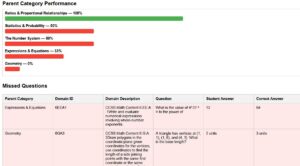
A Kindergarten Math Test provides more than a score—it delivers meaningful insights into early learning.
Results include:
- Overall performance summary
- Identification of strengths
- Clear breakdown of skill gaps
- Domain-level performance analysis
- Standards-aligned feedback
Each question is tied to a specific skill, making it easy to understand where support is needed.
5 Key Assessment Skill Insights
The Kindergarten Math Test reveals the most important aspects of early math development:
1. Number Sense Development
Evaluate how well a child understands numbers, counting, and quantity relationships.
2. Early Arithmetic Skills
Measure basic addition and subtraction readiness.
3. Pattern Recognition
Assess the ability to identify and extend patterns—an essential early math skill.
4. Spatial Awareness
Evaluate understanding of shapes, positions, and spatial relationships.
5. Readiness for First Grade Math
Determine whether the student is prepared for the next stage of learning.
Why Early Math Assessment Matters
Early math skills are critical for long-term academic success. A Kindergarten Math Test helps identify gaps before they become larger challenges.
Key Benefits:
- Early Identification of Learning Gaps
Address challenges before they impact future learning. - Strong Foundation Building
Ensure students develop essential math skills early. - Confidence Development
Help students feel successful and capable in math. - Guided Instruction
Provide clear direction for teaching and practice.
Who This Assessment Is For
The Kindergarten Math Test is ideal for:
- Parents evaluating school readiness
- Teachers assessing classroom performance
- Homeschool families tracking progress
- Tutors identifying areas for early intervention
Because early learning varies widely, having accurate data is essential.
Using Results to Improve Learning
The insights from a Kindergarten Math Test make it easier to focus on what matters most.
Instead of reviewing all concepts equally, parents and educators can:
- Focus on weak areas
- Reinforce strong skills
- Use targeted practice activities
- Support gradual skill development
This targeted approach leads to faster and more effective improvement.
Track Progress Over Time
Taking a Kindergarten Math Test regularly allows for tracking growth and development.
Benefits include:
- Monitoring improvement in key skills
- Identifying consistent challenges
- Adjusting learning strategies
- Supporting long-term success
Consistent assessment helps ensure that students stay on track as they progress.
What Makes This Assessment Different?
Not all early math tests provide meaningful insights. This assessment is designed for accuracy and usability.
- Covers essential early math domains
- Provides clear, easy-to-understand results
- Offers instant feedback
- Focuses on conceptual understanding
- Supports individualized learning
This ensures that results are both useful and actionable.
Start Your Kindergarten Math Test Today
If you want a clear understanding of early math development, a Kindergarten Math Test provides the insights you need. With diagnostic assessment and instant results, you can confidently support your child’s learning journey.
Take the first step toward building strong math skills and long-term academic success today.
Explore More: Back to K–12 Math Practice Tests (Free & Diagnostic)